Monday, June 18, 2012

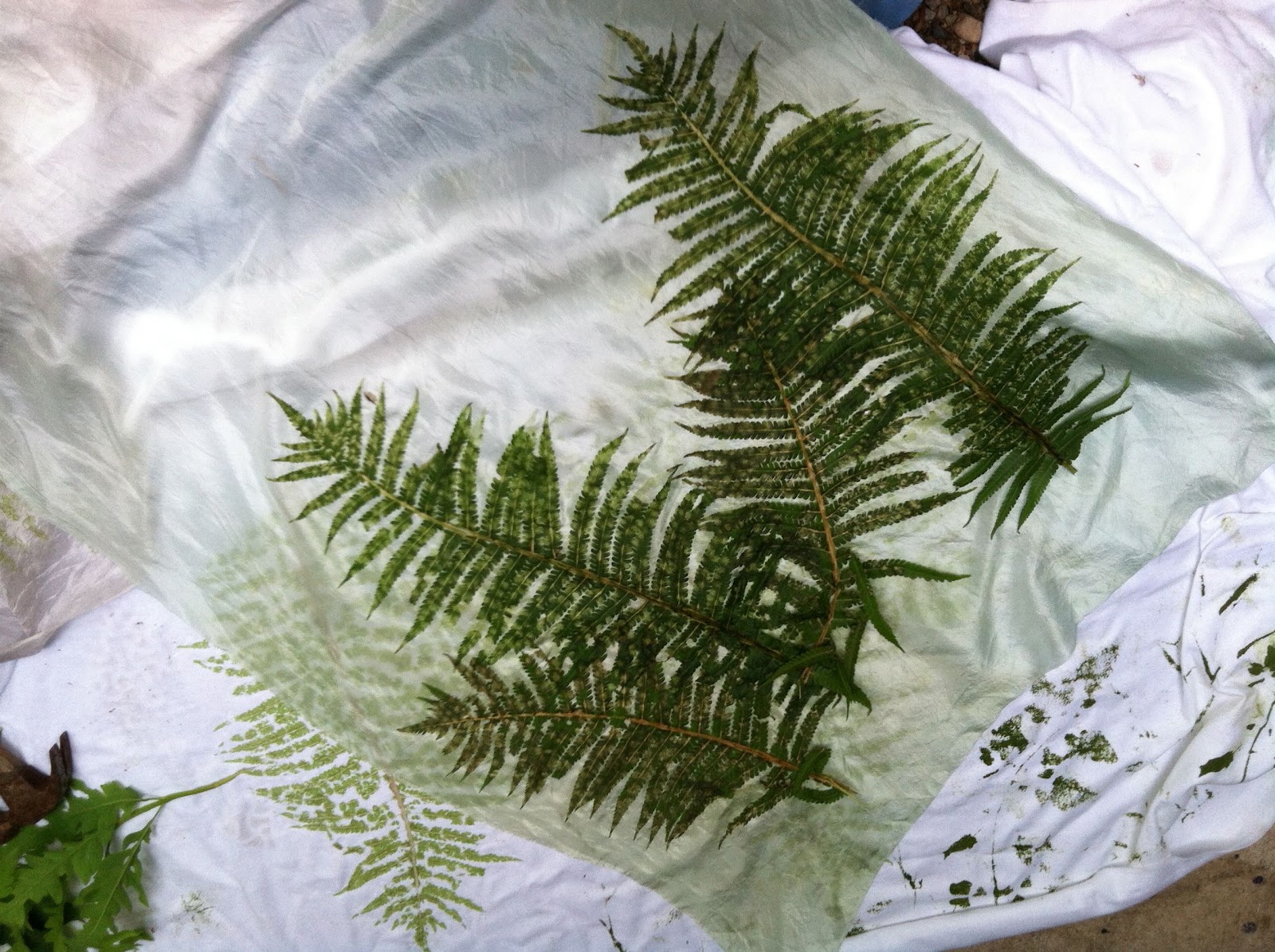
Fern gully.

I used the hapa-zome method of beating color into cloth using a fern frond on silkHapa-zome is literally "leaf-dye" in Japanese, according to India Flint, author of Eco Colour: Botanical Dyes for Beautiful Textiles


It's one of the easiest ways to transfer the color and pattern of plant material onto fabric. Be patient, as hammering too hard will no doubt create holes.
Hapa-zome Technique by India Flint


Materials
  • Leaves
  • A small hammer or mallet
  • Some cloth of fairly dense weave (not too flimsy)
  • Thin cardboard or thick paper (such as cardstock)


1. Place the paper or cardstock on your work surface (such as a sturdy bench or uncarpeted floor) and place your cloth on the paper.
2. Arrange your leaves on the fabric. You could make a discrete array of leaves, overlap them slightly, or chop and scatter them over the surface of the fabric.
3. Fold over the cloth and place another piece of paper on top of the cloth and apply the hammer. It can take a little practice to get the hammer strokes just right, so experiment.
4. Remove the plant material and let the cloth dry thoroughly. Then press with a steam iron or heat press to set the color. (Despite this, the color will probably fade over time. Consider it part of the natural process.)
Eco Colour is filled with techniques for using plant materials to print and dye with in every season. Along with ideas for how to use the resulting fabrics. India suggests, for example, that you use the hapa-zome method to decorate t-shirts.
The fern may fade and change with time... but, so will I!

Thursday, June 7, 2012

Splendor in the grass.


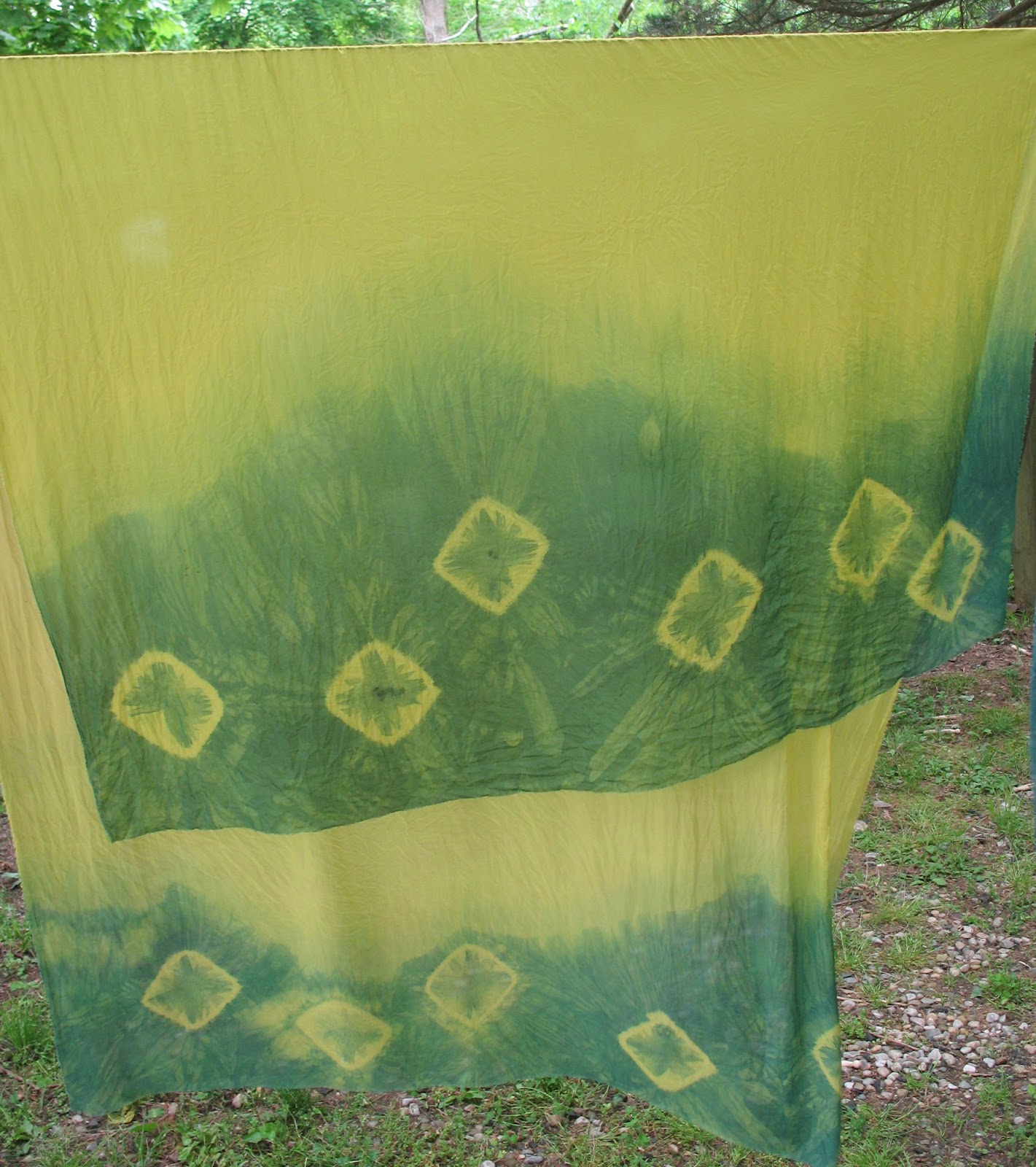
Nothing is more intoxicating than the scent of freshly cut grass. This many shades of green scarf evokes that smell and all that summer days mean to me. It's 90'' long and 54 inches wide. Use it as a scarf or shawl, a sarong at the beach, or spread it out for a most elegant picnic in the grass.

Wednesday, June 6, 2012

Mellow yellow.


For centuries, all over the globe, turmeric has been used as a reliable textile colorant. Tibetan Monks have used Turmeric to dye there golden garments. The simmered seasoning will grab onto any fabric with gusto, so care must be taken if the color you desire is a more mellow yellow.
I was recently commissioned to dye and silk screen six drapery panels. The dye desired was Turmeric, and the initial color was way too brilliant. I had to wash and wash and wash until the color faded to more of a buttery hue, rather than maize. The monks robes will fade with time, too, but all it takes is a quick dip back in to the saffron colored soup and they are brilliant gold once again! This method works great for something like drapes, as they don't require many washings. The color will hold- no worries.
Saturday, June 2, 2012

Cold, misty June morning.


Fog

The fog comes
on little cat feet.

It sits looking
over harbor and city
on silent haunches
and then moves on. 
Carl Sandburg

Sand and Fog.


Logwood Gray and Chestnut extracts infused this silk with hints of foggy geometric shapes. Wooden blocks, bamboo chop sticks and flaxen twine were the resist tools used.

Sunday, May 27, 2012

Art Meets Commerce.

Thank you, lovely Zoe Zellers, for the article you wrote for The Fairfield County Business Journal. You really conveyed what is most meaningful about what I do and why I do it. Much appreciated!

Monday, May 21, 2012

Birthday Khaki, for everyone.

This is what I did on my (50th!) birthday this year, which was also mother's day. It was warm and windy, and the family said, "It's your day. Do what you want." I did. Cotton and cashmere blend.


Indigo, fustic, chestnut and dipping and re-dipping... I finally achieved the color I wanted!

Sunday, May 20, 2012

New look for old table linens.


I had several dingy, gravy stained table cloths that I originally bought while on a Harpers Bazaar shoot in Taormina, Sicily. I avoided using them due to the yellowing that happens to old linens after 30 years, but now I have given new life to these practically vintage linens with a rejuvenating beauty bath of indigo and sunshine. I also dipped a bunch of linen scraps that will make wonderful reusable dinner napkins. Okay, I get the next rejuvenating bath, thank you!

Tuesday, May 15, 2012

Blue Ray Vision.

Here we go Indigo... again. Never dull or disappointing, the mystical qualities of the ancient art of Indigo dyeing are always stunning and often surprising. When mixed with the Indigo, the yellow/green dye that was a result of cooking down my fustic, unexpectedly  turned out that very tribal looking red and navy piece. Who knew?


Monday, May 7, 2012

Sheer beauty.

A softer palette of white and bone with feather gray accents, on ultra sheer Italian silk Mousseline and organza.


Thursday, May 3, 2012